How the lifting range defines where a cleanroom crane can operate

Lifting a load is the base of any lifting solution in a cleanroom. To define the right lifting solution, several aspects need to be considered. Two key concepts play a role; the lifting area and the lifting range. How these are defined and applied depends on the type of crane used.

Lifting area

What is meant by lifting area?

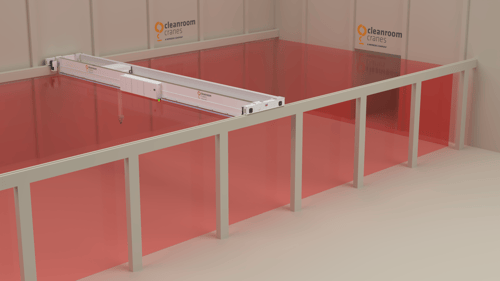
The lifting area describes the area on the floor over which a load can be positioned during lifting and handling operations. It represents the two-dimensional projection of all possible load positions.

The lifting area includes:
•  the pick-up location;
•  the travel path of the load;
•  the set-down location.  

This concept is commonly used when defining safety zones, restricted areas and risk assessments within a cleanroom.

In short: where can the load be positioned above the floor?


Lifting range

What is meant by lifting range?

The lifting range describes what the crane can technically reach, both horizontally and vertically. It is therefore a three-dimensional concept.

The lifting range consists of:
•  the lifting area on the floor;
•  multiplied by the available lifting hight.

This defines the full volume within which a load can be picked up, moved and positioned.

The lifting range serves as an important starting point when designing or selecting a cleanroom crane.


Relationship between lifting area and lifting range

• Lifting area = floor plan (X and Y)
• Lifting range = lifting area × lifting height (X, Y and Z)
Together, these concepts clarify what is technically feasible within a specific space.

Horizontal and vertical movement

The lifting range is created by the combination of two movements:
• horizontal: the movemen tof the crane and the trolley with hoist;
• vertical: the movement of the hoist between its lowest and highest position.
Together, these movements define the outer limits of the lifting range.

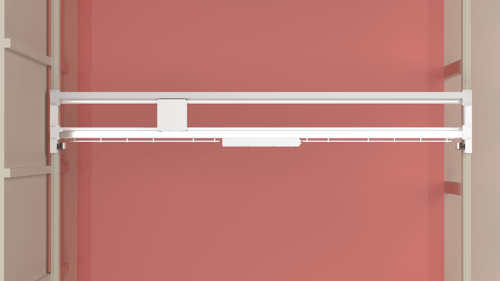
Lifting range overhead crane

Lifting range of an overhead crane

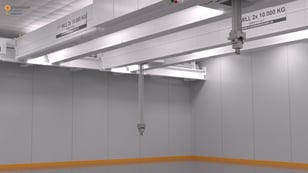
For an overhead crane, the lifting range is linked to the fixed runway structure of the building. The crane travels along this runway, while the trolley with hoist moves across the crane girder.

The extreme positions of the hoist are defined by the length of the runway, the span of the crane girder and the available lifting height beneath the ceiling. As a result, the lifting range is fixed within one clearly defined and repeatable working area.

In cleanroom environments, an overhead crane is typically used when lifting operations are a structural or frequent part of the process. The fixed lifting range provides predictability and stability, which suits environments with repeatable movements, fixed workstations and continuous logistical flows.
 

Lifting range gantry crane

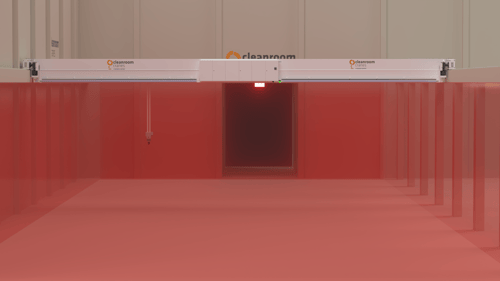
Lifting range of a gantry crane

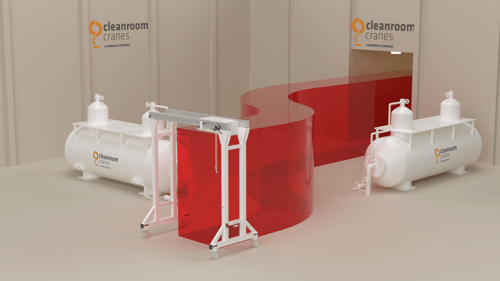
For a gantry crane, a simple principle applies: where the gantry crane can travel, the hoist can reach.

The lifting range moves along with the crane and is defined by the available travel space on the floor, the span of the gantry and the clear height beneath ceilings and installations. The working area is therefore not fixed to a single location and may vary depending on the situation.

In cleanroom environments, a gantry crane is often used for small to medium loads and in situations where lifting operations take place periodically or on a project basis. Its movable design makes it possible to provide lifting capacity where and when it is needed, without integrating a fixed runway into the space.

From concept to application

When determining the appropriate lifting range, several factors come into play. These include the weight and dimensions of the load, the available space within the cleanroom, the required lifting height and how frequently lifting operations take place. The level of flexibility in the process, whether fixed or variable, also influences the choice of crane type and the associated lifting range.

The lifting range defines how far the hoist can reach in its extreme positions and therefore forms the basis for how a cleanroom crane is used in practice. By clearly defining this range, it becomes possible to understand what is technically feasible within a specific space, regardless of the crane type.

Questions about the required lifting range in a specific cleanroomcontext?

A technical expert can support the selection of a lifting solution that aligns with the space, process and technical requirements. Please contact us via the contact form at the bottom of this page.

More news

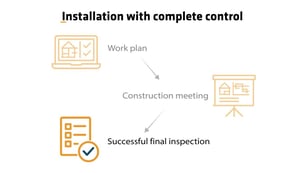
Why construction meetings are essential for a flawless crane installation

Why construction meetings are essential for a flawless crane installation

Installing a cleanroom crane requires precision—not only in steel, but also in planning. Construction meetings provide the overview needed to identify bottlenecks early and prevent delays.


Read more

More than 25 years of engineering expertise in cleanroom lifting

Since 1888, Mennens has built engineering expertise in lifting technology. Since 2024, Mennens Cleanroom Cranes operates as an independent company, with a clear focus on lifting solutions for cleanrooms and controlled production environments.

In the article below, published in the Mennens magazine, we look back at the origins of Cleanroom Cranes and ahead.

Read more

Why a work plan is more than just preparation


 A cleanroom crane is never installed without planning. Behind every successful installation lies a work plan that brings together technology, scheduling, and collaboration. This silent force repeatedly proves decisive for controlled execution without surprises 

Read more

Crane track, crane and trolley with hoist: a clear explanation

At first sight, a cleanroom crane appears as one complete system. In reality, it is made up of several components that work together to move loads with precision and control.

Read more
Back to overview

Get advice

Our experts are ready to assist you.

Contact image 414x414 (1)

Need customization?

Contact image 414x414 (1)

Mennens Cleanroom Cranes B.V.

Achtseweg Zuid 161
5651 GW Eindhoven
The Netherlands
T +31(0)88 425 83 00
sales@cleanroomcranes.nl
www.cleanroomcranes.nl