Stainless steel vs coated steel in cleanroom cranes: how to choose the right material.

Material selection in cleanroom cranes is often underestimated. Choosing the wrong material can introduce contamination risks, increase system weight or result in unnecessary costs in highly controlled environments.

The choice between stainless steel and coated steel may seem straightforward at first, but is highly dependent on the application. Material selection directly impacts cleanliness, contamination risk, costs and process reliability in controlled environments.
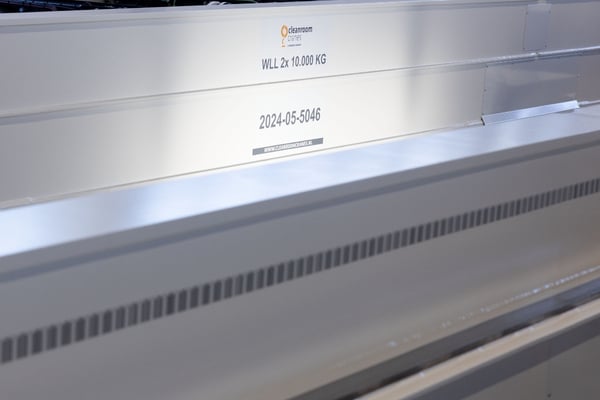
When is stainless steel really required and when is coated steel sufficient?

The decision is not about preference, but about process conditions.

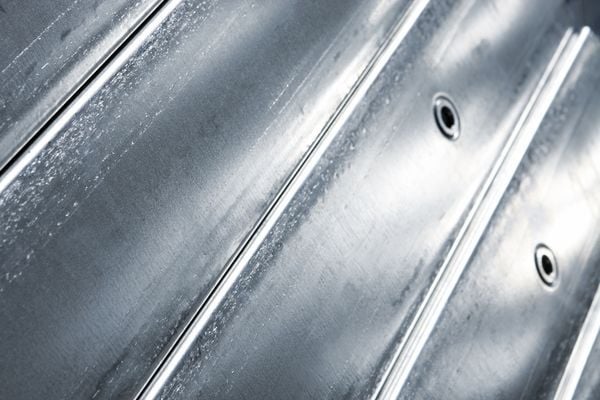
Close up - RVS

Stainless steel is typically required when:

•  Environments are wet or require aggressive cleaning agents.
•  Corrosion resistance is critical.
•  Surfaces are frequently exposed to chemicals or fluids.

Cloce up - Gecoat staal-1

Coated steel is often sufficient when:

•  The environment is dry and controlled.
•  Contamination risks are managed through design and surface treatment.
•  Cleanability and durability are ensured through the right coating system.

In these cases, coated steel can offer the same functional performance at significantly lower cost, provided that the surface treatment is correctly specified.

Stainless steel, on the other hand, is typically four to five times more expensive and may result in heavier constructions and higher integration costs. The right choice therefore depends not only on hygiene requirements, but on actual process conditions in controlled environments.

Key risks: contamination vs overengineering

An incorrect material choice has direct consequences.

With coated steel, the main risk is:
 •    Coating damage or migration leading to contamination in critical processes.

With stainless steel, the main risk is:
 •    Overengineering, resulting in unnecessary costs and increased system weight.

Material behaviour under specific process conditions ultimately determines both contamination risk and long-term system performance.

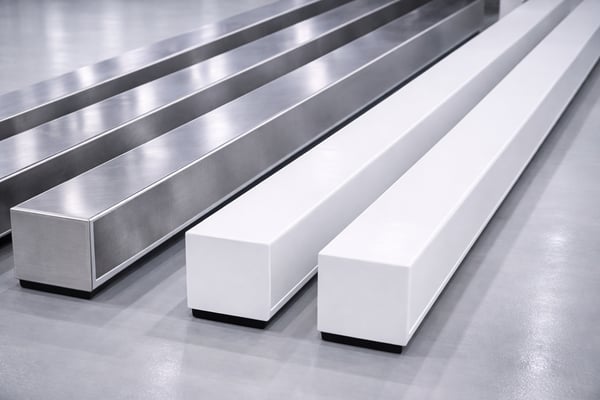
In a dry high-tech cleanroom without corrosive exposure, a coated steel crane system with an appropriate surface treatment can fully meet requirements. Coatings are widely applied in such environments, for example in pharmaceutical processes, where cleanability and controlled particle behaviour are essential.

RVS & gecoat

How to make the right material decision

The key question is not which material is ‘better’, but which material fits the actual process conditions.

A well-founded comparison requires an integrated assessment of:
•  cleaning methods (dry vs wet);
•  exposure to substances and chemicals;
•  surface cleanliness and cleanability;
•  maintenance requirements;
•  long-term performance and lifecycle impact.

Only by evaluating these factors together can a technically and economically sound decision be made.

The choice between stainless steel and coated steel is not a standard decision, but a technical one. Aligning material selection with actual process conditions results in a solution that supports reliable and predictable operations while remaining cost-efficient over the system lifecycle.

 Discuss your material selection with one of our experts via the contact form

More news

MCC at Clean Event 2026

On April 23, Mennens Cleanroom Cranes will participate in Clean Event 2026, organised by Mikrocentrum. The event is free to attend upon registration and brings together professionals working in contamination-controlled and high-tech manufacturing environments, with a shared focus on cleanliness, contamination control and process reliability.

Read more

Stopping systems in cleanroom cranes

A cleanroom crane does not operate in unlimited space. Its movement is confined to a clearly defined lifting range determined by the runway structure and the mechanical design of the system. That range defines where loads may be transported and positioned.

Protecting those boundaries is essential. For that reason, cleanroom cranes are equipped with dedicated stopping systems at the ends of the runway.

ENG Stopsystem 1

Read more

Lifting systems within the V-Model of cleanroom validation

The V-Model of validation structures the relationship between design and qualification in cleanroom projects. What is often overlooked is that lifting systems already influence this structure at an early stage. Decisions made during functional design determine how smoothly installation, operational and performance qualification will proceed.

Read more

The technical foundations of cleanroom lifting solutions

Specifying a cleanroom crane does not start with lifting capacity, but with insight and technical understanding. Which ISO classification applies? What contamination risks are present? Which material and cleaning requirements must be considered?

Without this foundation, unnecessary risks arise in design, delays in validation and process instability.


That is why we have developed a series of technical whitepapers to support engineers and cleanroom managers in specifying lifting solutions in cleanrooms and controlled production environments.


Read more
Back to overview

Get advice

Our experts are ready to assist you.

Contact image 414x414 (1)

Need customization?

Contact image 414x414 (1)

Mennens Cleanroom Cranes B.V.

Achtseweg Zuid 161
5651 GW Eindhoven
The Netherlands
T +31(0)88 425 83 00
sales@cleanroomcranes.nl
www.cleanroomcranes.nl